
Recovery

BPC-157: The Ultimate Guide to the Body Protection Compound

Actualizado junio 2026 · 10 min de lectura

BPC-157 is arguably the most versatile healing peptide in the research landscape. Derived from a protein found naturally in human gastric juice, this pentadecapeptide (a chain of 15 amino acids) has demonstrated remarkable regenerative properties across an extraordinary range of tissues and injury types. With over 100 peer-reviewed studies documenting its effects, BPC-157 has earned its informal title as the «body protection compound» through consistent, reproducible results in preclinical research.

Origin and Structure

BPC-157 is a partial sequence of a larger protein called Body Protection Compound, which is naturally present in human gastric juice at nanogram concentrations. The peptide’s sequence – Gly-Glu-Pro-Pro-Pro-Gly-Lys-Pro-Ala-Asp-Asp-Ala-Gly-Leu-Val – was identified and synthesised by researchers at the University of Zagreb in Croatia, who have published the majority of the foundational research on this compound.

Unlike many bioactive peptides, BPC-157 is remarkably stable. It resists degradation in gastric acid (which makes sense given its origin), does not require a carrier protein, and maintains biological activity across a wide pH range. This stability is unusual for a peptide of this size and contributes to its versatility as a research compound.

Mechanisms of Action

BPC-157 does not operate through a single receptor or pathway. Instead, it modulates multiple interconnected healing systems, which likely explains its broad tissue applicability.

Angiogenesis (New Blood Vessel Formation)

One of BPC-157’s most consistently documented effects is its promotion of angiogenesis – the formation of new blood vessels in damaged tissue. It upregulates VEGF (vascular endothelial growth factor) and its receptors, particularly VEGFR2, in injured areas. New blood vessel formation is critical for tissue healing because it restores oxygen and nutrient delivery to damaged regions. Studies have shown that BPC-157 accelerates blood vessel formation in crush injuries, severed tissues, and ischaemic regions.

Nitric Oxide System Modulation

BPC-157 interacts extensively with the nitric oxide (NO) system, which plays a central role in wound healing, vascular function, and inflammation. Research suggests it can modulate NO production in a context-dependent manner – increasing it when NO is beneficial (as in vasodilation and tissue repair) and mitigating excess NO in inflammatory conditions. This bidirectional modulation may partly explain BPC-157’s anti-inflammatory effects without the immunosuppression associated with corticosteroids.

Growth Factor Upregulation

Beyond VEGF, BPC-157 has been shown to increase expression of several growth factors relevant to tissue repair:

  • EGF (Epidermal Growth Factor): Promotes epithelial cell proliferation and wound closure
  • FGF (Fibroblast Growth Factor): Stimulates fibroblast activity and connective tissue formation
  • TGF-beta: Regulates extracellular matrix production and tissue remodelling
  • HGF (Hepatocyte Growth Factor): Promotes tissue regeneration across multiple organ systems

FAK-Paxillin Pathway

More recent research has identified BPC-157’s activation of the FAK-paxillin signalling pathway, which governs cell adhesion, migration, and proliferation. This pathway is fundamental to wound healing – cells must adhere to the extracellular matrix and migrate toward the injury site for repair to occur. BPC-157 appears to upregulate this pathway specifically in damaged tissue, accelerating the cellular organisation necessary for structural repair.

Research Applications by Tissue Type

Tendons and Ligaments

BPC-157’s most extensively studied application. In transected Achilles tendon models, BPC-157 significantly accelerated functional recovery, with treated tendons showing earlier and more organised collagen formation, greater tensile strength at each timepoint, and earlier restoration of biomechanical function. The MCL (medial collateral ligament) research shows similar acceleration of ligament healing with improved collagen architecture.

Gastrointestinal Tract

Given its gastric origin, BPC-157 shows particular efficacy in GI healing. It has demonstrated protective and healing effects in models of inflammatory bowel disease, gastric ulcers, oesophageal lesions, and intestinal anastomosis healing. It appears to strengthen the mucosal barrier, reduce inflammatory cytokine expression, and accelerate epithelial regeneration. This has made it popular in anecdotal reports from users of GLP-1 agonists who experience GI side effects.

Muscle Tissue

In crushed muscle injury models, BPC-157 accelerated functional muscle recovery and promoted more organised muscle fibre regeneration. It appears to enhance satellite cell activation – the muscle stem cells responsible for regeneration – and reduce fibrotic scar tissue formation in the repair zone.

Bone

Animal studies demonstrate accelerated fracture healing with BPC-157 treatment, showing earlier callus formation and mineralisation. The peptide appears to enhance osteoblast activity and promote the transition from soft callus to hard callus more efficiently.

Neuroprotection

An emerging research area shows BPC-157 has neuroprotective properties. It has demonstrated efficacy in models of peripheral nerve crush injury, traumatic brain injury, and spinal cord injury. The mechanisms involve both direct neuroprotection and enhanced regeneration through growth factor upregulation and angiogenesis at the injury site.

The BPC-157 and TB-500 Combination

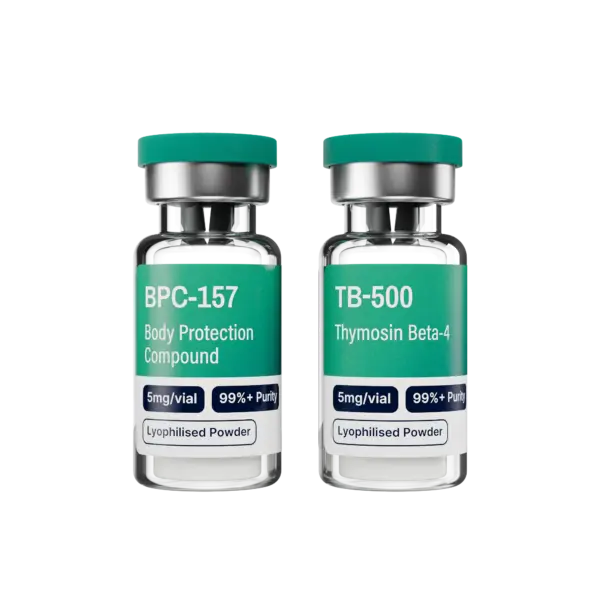
Many researchers combine BPC-157 with TB-500 (Thymosin Beta-4) based on their complementary mechanisms. While BPC-157 primarily promotes angiogenesis and growth factor expression, TB-500 excels at reducing inflammation and promoting cell migration. The theoretical synergy is that TB-500 creates a more favourable inflammatory environment while BPC-157 drives the structural repair processes. Though no head-to-head or combination studies exist in peer-reviewed literature, the mechanistic rationale is sound.

Safety Profile

BPC-157 has a notably clean safety profile in the published research. No toxic dose has been identified in animal studies – a rarity for bioactive peptides. No organ toxicity, mutagenicity, or significant adverse effects have been documented across dozens of studies using various routes of administration and dosing protocols.

However, it is important to note that the bulk of the evidence comes from animal studies. Large-scale human clinical trials are limited, and the long-term safety profile in humans remains to be fully characterised.

Key

BPC-157 is arguably the most versatile healing peptide in the research landscape. Derived from a protein found naturally in human gastric juice, this pentadecapeptide (a chain of 15 amino acids) has demonstrated remarkable regenerative properties across an extraordinary range of tissues and injury types. With over 100 peer-reviewed studies documenting its effects, BPC-157 has earned its informal title as the «body protection compound» through consistent, reproducible results in preclinical research.

Origin and Structure

BPC-157 is a partial sequence of a larger protein called Body Protection Compound, which is naturally present in human gastric juice at nanogram concentrations. The peptide’s sequence – Gly-Glu-Pro-Pro-Pro-Gly-Lys-Pro-Ala-Asp-Asp-Ala-Gly-Leu-Val – was identified and synthesised by researchers at the University of Zagreb in Croatia, who have published the majority of the foundational research on this compound.

Unlike many bioactive peptides, BPC-157 is remarkably stable. It resists degradation in gastric acid (which makes sense given its origin), does not require a carrier protein, and maintains biological activity across a wide pH range. This stability is unusual for a peptide of this size and contributes to its versatility as a research compound.

Mechanisms of Action

BPC-157 does not operate through a single receptor or pathway. Instead, it modulates multiple interconnected healing systems, which likely explains its broad tissue applicability.

Angiogenesis (New Blood Vessel Formation)

One of BPC-157’s most consistently documented effects is its promotion of angiogenesis – the formation of new blood vessels in damaged tissue. It upregulates VEGF (vascular endothelial growth factor) and its receptors, particularly VEGFR2, in injured areas. New blood vessel formation is critical for tissue healing because it restores oxygen and nutrient delivery to damaged regions. Studies have shown that BPC-157 accelerates blood vessel formation in crush injuries, severed tissues, and ischaemic regions.

Nitric Oxide System Modulation

BPC-157 interacts extensively with the nitric oxide (NO) system, which plays a central role in wound healing, vascular function, and inflammation. Research suggests it can modulate NO production in a context-dependent manner – increasing it when NO is beneficial (as in vasodilation and tissue repair) and mitigating excess NO in inflammatory conditions. This bidirectional modulation may partly explain BPC-157’s anti-inflammatory effects without the immunosuppression associated with corticosteroids.

Growth Factor Upregulation

Beyond VEGF, BPC-157 has been shown to increase expression of several growth factors relevant to tissue repair:

  • EGF (Epidermal Growth Factor): Promotes epithelial cell proliferation and wound closure
  • FGF (Fibroblast Growth Factor): Stimulates fibroblast activity and connective tissue formation
  • TGF-beta: Regulates extracellular matrix production and tissue remodelling
  • HGF (Hepatocyte Growth Factor): Promotes tissue regeneration across multiple organ systems

FAK-Paxillin Pathway

More recent research has identified BPC-157’s activation of the FAK-paxillin signalling pathway, which governs cell adhesion, migration, and proliferation. This pathway is fundamental to wound healing – cells must adhere to the extracellular matrix and migrate toward the injury site for repair to occur. BPC-157 appears to upregulate this pathway specifically in damaged tissue, accelerating the cellular organisation necessary for structural repair.

Research Applications by Tissue Type

Tendons and Ligaments

BPC-157’s most extensively studied application. In transected Achilles tendon models, BPC-157 significantly accelerated functional recovery, with treated tendons showing earlier and more organised collagen formation, greater tensile strength at each timepoint, and earlier restoration of biomechanical function. The MCL (medial collateral ligament) research shows similar acceleration of ligament healing with improved collagen architecture.

Gastrointestinal Tract

Given its gastric origin, BPC-157 shows particular efficacy in GI healing. It has demonstrated protective and healing effects in models of inflammatory bowel disease, gastric ulcers, oesophageal lesions, and intestinal anastomosis healing. It appears to strengthen the mucosal barrier, reduce inflammatory cytokine expression, and accelerate epithelial regeneration. This has made it popular in anecdotal reports from users of GLP-1 agonists who experience GI side effects.

Muscle Tissue

In crushed muscle injury models, BPC-157 accelerated functional muscle recovery and promoted more organised muscle fibre regeneration. It appears to enhance satellite cell activation – the muscle stem cells responsible for regeneration – and reduce fibrotic scar tissue formation in the repair zone.

Bone

Animal studies demonstrate accelerated fracture healing with BPC-157 treatment, showing earlier callus formation and mineralisation. The peptide appears to enhance osteoblast activity and promote the transition from soft callus to hard callus more efficiently.

Neuroprotection

An emerging research area shows BPC-157 has neuroprotective properties. It has demonstrated efficacy in models of peripheral nerve crush injury, traumatic brain injury, and spinal cord injury. The mechanisms involve both direct neuroprotection and enhanced regeneration through growth factor upregulation and angiogenesis at the injury site.

The BPC-157 and TB-500 Combination

Many researchers combine BPC-157 with TB-500 (Thymosin Beta-4) based on their complementary mechanisms. While BPC-157 primarily promotes angiogenesis and growth factor expression, TB-500 excels at reducing inflammation and promoting cell migration. The theoretical synergy is that TB-500 creates a more favourable inflammatory environment while BPC-157 drives the structural repair processes. Though no head-to-head or combination studies exist in peer-reviewed literature, the mechanistic rationale is sound.

Safety Profile

BPC-157 has a notably clean safety profile in the published research. No toxic dose has been identified in animal studies – a rarity for bioactive peptides. No organ toxicity, mutagenicity, or significant adverse effects have been documented across dozens of studies using various routes of administration and dosing protocols.

However, it is important to note that the bulk of the evidence comes from animal studies. Large-scale human clinical trials are limited, and the long-term safety profile in humans remains to be fully characterised.

Key Takeaways

  • BPC-157 is a 15-amino-acid peptide derived from human gastric juice with broad regenerative properties across multiple tissue types
  • Its primary mechanisms include angiogenesis promotion, nitric oxide system modulation, growth factor upregulation, and FAK-paxillin pathway activation
  • The strongest research evidence supports its use in tendon, ligament, GI tract, and muscle healing
  • It is often combined with TB-500 for complementary healing mechanisms
  • No toxic dose has been identified in animal studies, though large-scale human clinical trials remain limited
  • Its gastric origin gives it unusual stability compared to other peptides of similar size

Takeaways

  • BPC-157 is a 15-amino-acid peptide derived from human gastric juice with broad regenerative properties across multiple tissue types
  • Its primary mechanisms include angiogenesis promotion, nitric oxide system modulation, growth factor upregulation, and FAK-paxillin pathway activation
  • The strongest research evidence supports its use in tendon, ligament, GI tract, and muscle healing
  • It is often combined with TB-500 for complementary healing mechanisms
  • No toxic dose has been identified in animal studies, though large-scale human clinical trials remain limited
  • Its gastric origin gives it unusual stability compared to other peptides of similar size

Ready to Try BPC-157?

Lab-tested, ≥98% purity. Fast EU shipping from our European warehouse.